Version 3.21
nTopology 3.21 is here! This release features a newly designed Heads Up Display (HUD) for simulation and topology optimization, enabling more effective post-processing. Along with the new HUD, we implemented speed improvements for several blocks, including Mesh from Implicit Body. As with every release, nTopology’s dedicated support team is ready to answer your questions. Please visit support.ntopology.com to gain access to helpful tutorials and support articles.
Simulation and Topology Optimization Heads Up Display
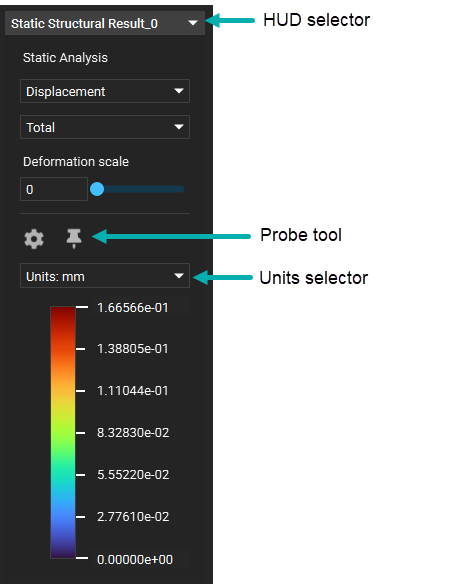
We’ve made some major improvements to the Simulation and Topology Optimization Heads Up Display (HUD) for more effective post-processing.
- The legend and controls are now semi-transparent, providing a more immersive feel.
- Using the HUD selector dropdown menu in the legend, you can easily toggle between different block results within the same notebook.
- You can now easily toggle between different units using the Units selector dropdown menu.
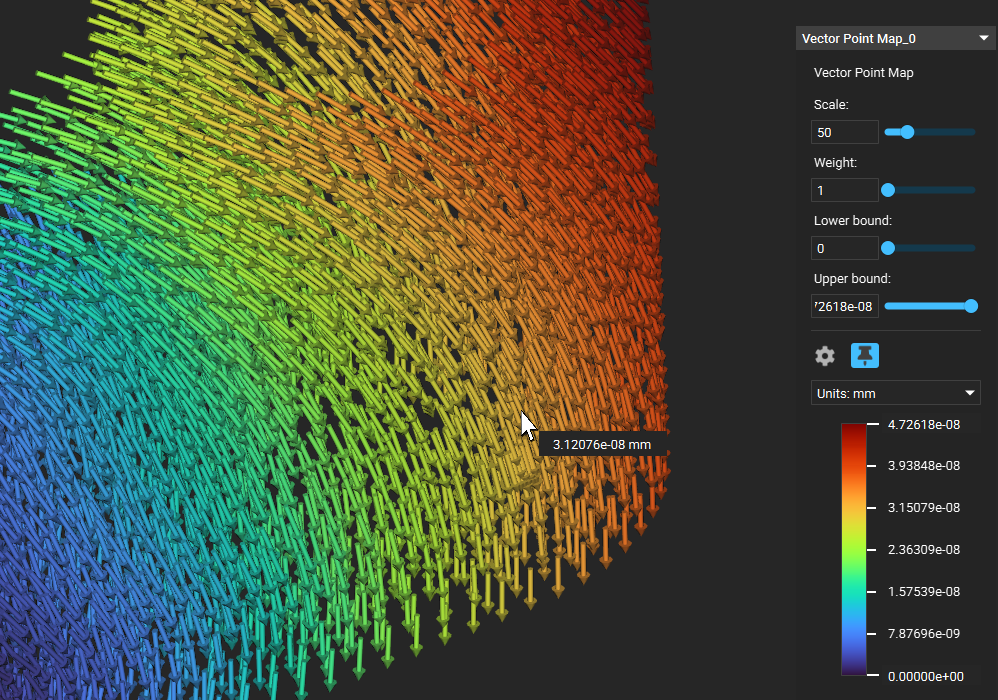
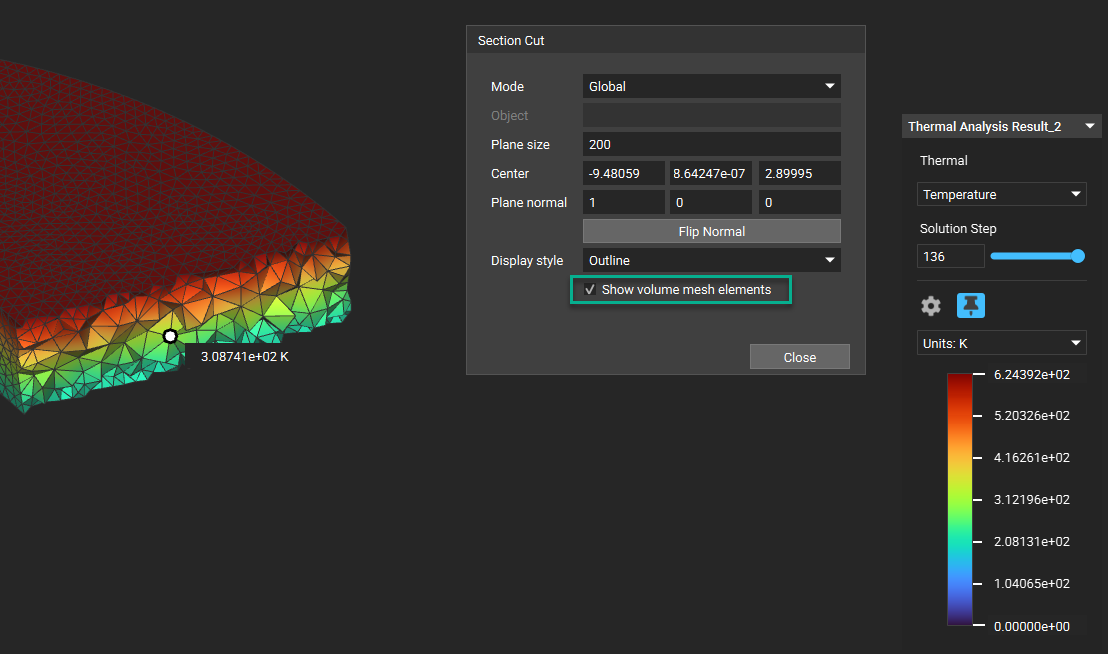
- Using the new Probe tool, you can query simulation result plots and point maps to view the numerical value of the plotted field at a specific location (not available for beam-based lattices or topology optimization results).
For scalar and vector point maps, the Probe tool will display the numerical value of the point or arrow closest to the mouse pointer.
For simulation results plots, the Probe Values tool will display the numerical value of the element vertex.
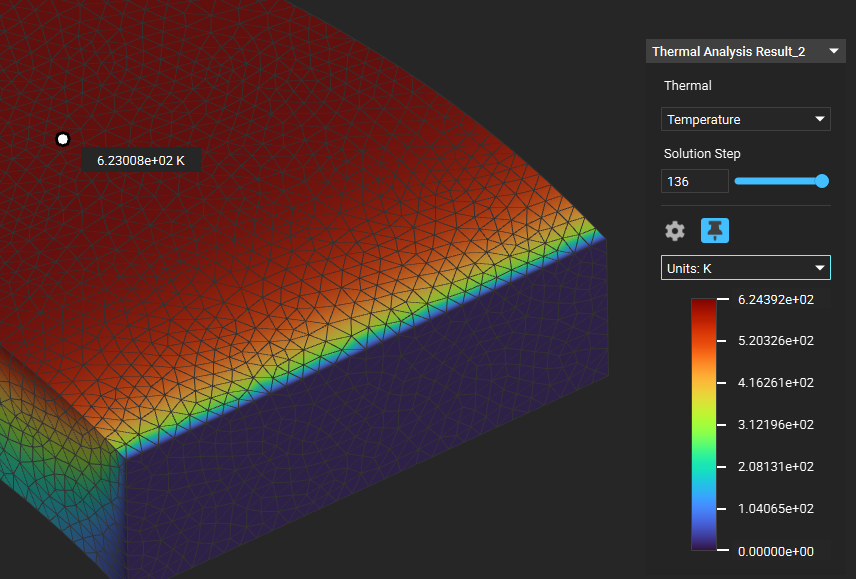
The Probe Values tool enables probing section cuts for volume simulation results by checking the “Show volume mesh elements” in the Section Cut dialog box. Note that the numerical value displayed correlates with the vertex of the full element at the section cut, which may not be directly on the section cut plane.
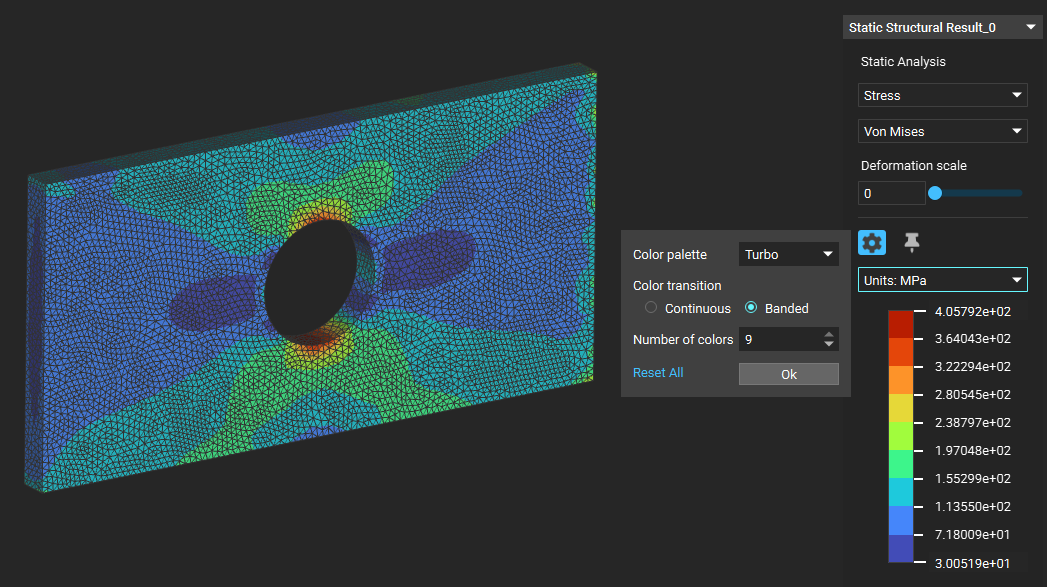
There is now an option to choose between banded or continuous colors for contour plots. You can select the number of bands (max of 9) for the new banded option in the legend, allowing you to easily visualize stress and strain thresholds.
Usage Improvements
- The Mesh from Implicit Body and Slice Body blocks have been improved to run approximately 30-50% faster.
- The following blocks or property evaluation have been improved to run approximately 5 time faster:
- Implicit Body from CAD Body
- Implicit Body from Mesh
- The Body property within the Mesh and Lattice, Thick Lattice, and Lattice Body types
Bug Fixes
- We fixed an issue where the Thermal Bonded Contact and Structural Bonded Contact blocks would give an error and not work if Boundary by Body was used to define the Independent or Dependent inputs. To remove the error in version 3.21 onwards, please rebuild the block.
- We fixed an issue where a long-running, existing progress bar does not stop loading and prevents a new file from opening.
- We fixed an issue that was causing the gradient vectors of Implicit Bodies to be not exactly normal to the body’s surface when the Implicit Body is located far from the global origin.
- We fixed a bug that was generating inaccurate gradient vectors for Implicit Bodies close to vertices and edges.
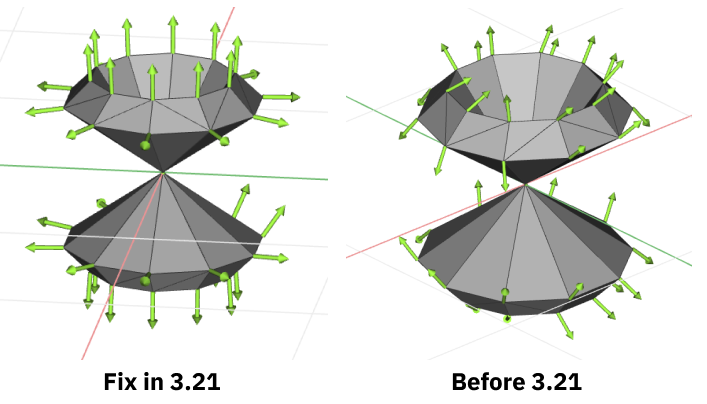
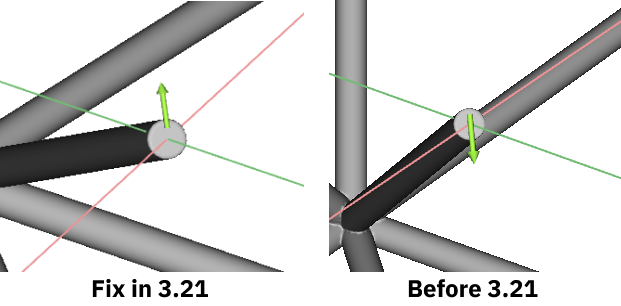
- We fixed a bug that cause gradient vectors to be flipped in constant-thickness lattices.