
nTopology 3.33 is here! This release features Notebook Search, making navigating through blocks easier. Warp Cell Map to Body (Beta) block lets you conform the cell map to the Body’s surface, and the improved Slice Body 3.1 (Beta) block delivers 3-5x shorter slicing time. As with every release, nTopology’s dedicated support team is ready to answer your questions. Please visit support.ntopology.com to gain access to helpful tutorials and support articles.
Notebook Search
Warp Cell Map to Body (Beta)
Slice Body 3.1 (Beta)
Simulation Glyph Size Control
Usage Improvements
Bug Fixes
Notebook Search
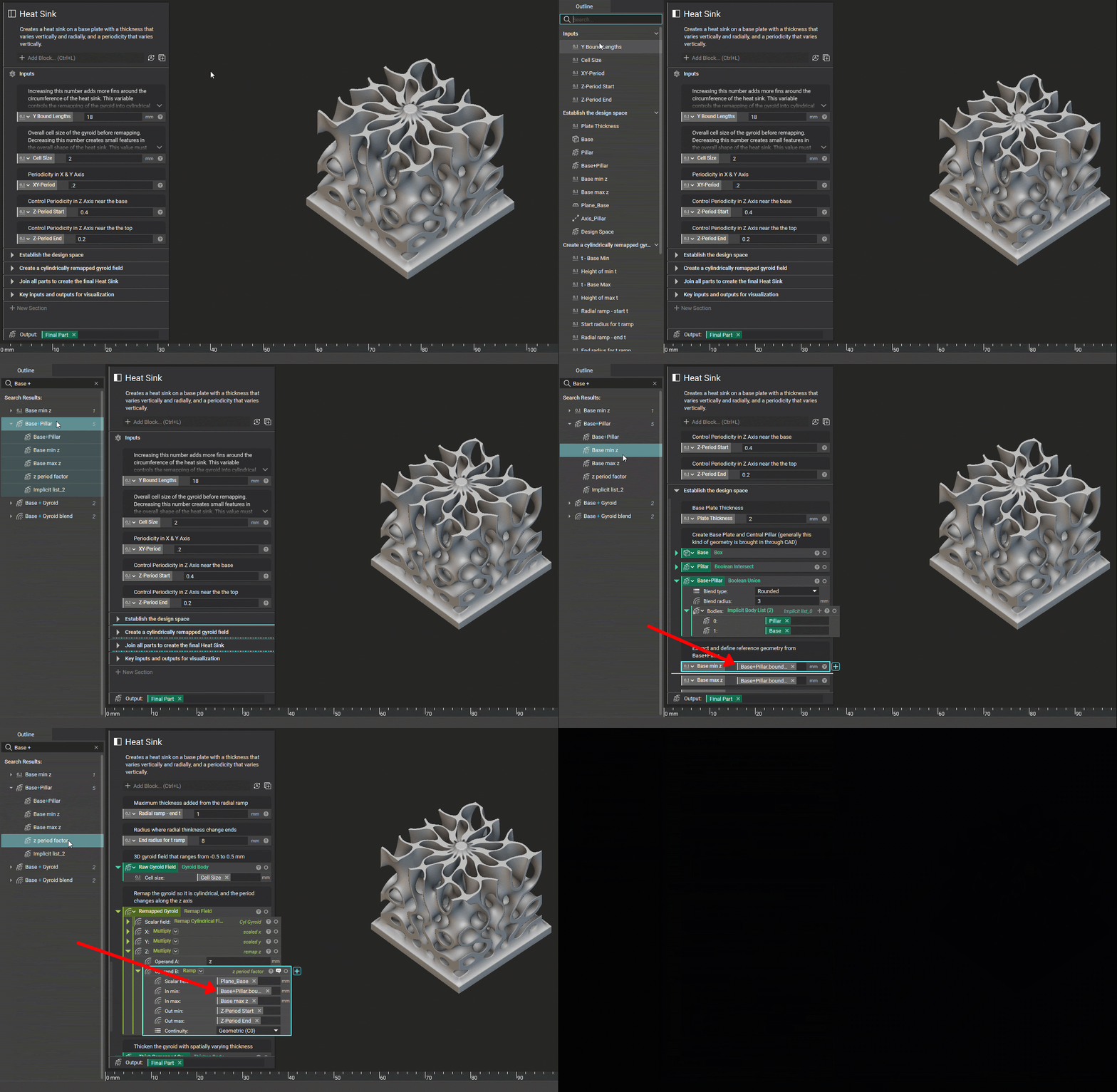 We’ve added a navigation improvement for you that has been long requested - you can now search for blocks used within your notebook. Within the recently-released Notebook Outline sidebar, there is now a search feature that will display filtered results and allow you easy navigation to them.
Tips:
- Ctrl+F will open the sidebar and activate the search window.
- You can exit the search by selecting the close button or the Esc key.
- Search will filter objects on three criteria:
- Block name
- If a block is a variable, the block names where it is instanced
- Matching comments
Warp Cell Map to Body (Beta)
- We released a new Cell Map utility block called Warp Cell Map to Body (Beta). TheWarp Cell Map to Body (Beta)block accepts an Implicit Body and a Cell Map and warps the maps’ outer layer of vertices to conform to the Body’s inner surface.
- Before 3.33, the only options available to create a conformal volume lattice were either using a stochastic lattice type such as Voronoi or creating a Periodic Lattice and trimming it to the volume. This was undesirable: stochastic lattices didn’t always fulfill users’ design requirements, and the trimming operation resulted in partial, incomplete unit cells with cut-off beams or faces. Using the Warp Cell Map to Body (Beta)block, you can now conform a Periodic Lattice to complex closed Implicit Bodies.
-
Tips
- If your Cell Map contains many cells outside of the Implicit Body, first use the Trim Cell Map block to reduce the number of cells. A maximum of one layer of cells outside the body’s volume is a good starting point. Experiment with the various Fill Type options in the Trim Cell Map to achieve the desired result.
- This block is designed to conform an entire Cell Map to a Body. Conforming only a partial section of the Cell Map is not supported.
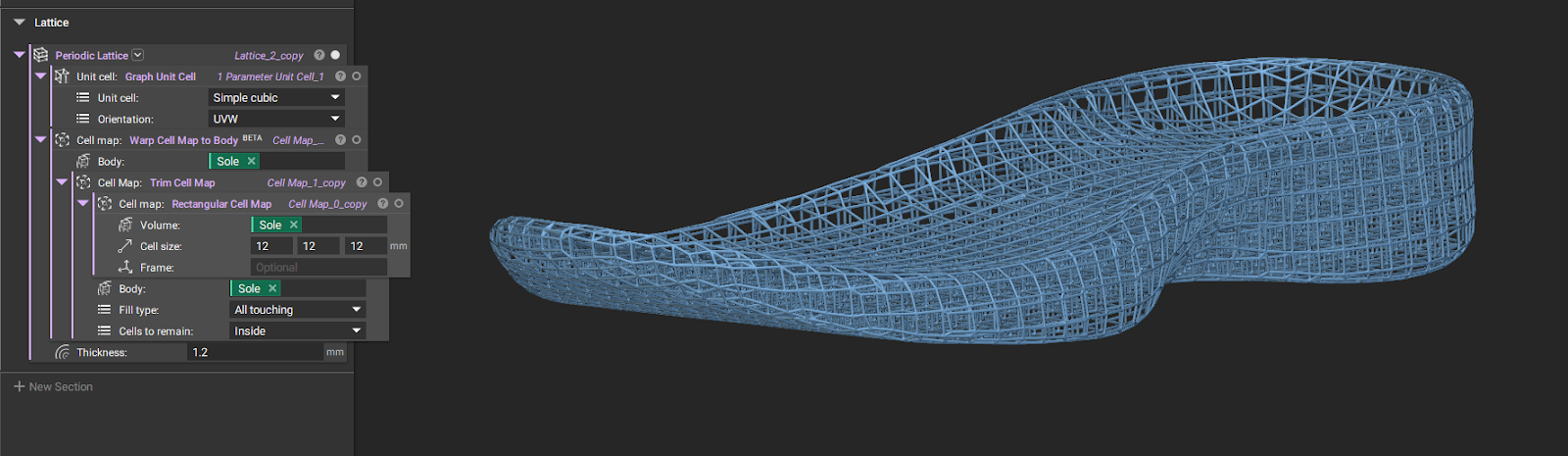
- Block Name: Warp Cell Map to Body (Beta)
- Location: Beta > Lattices - Cell Map
- Description: Warps a Cell Map to a body's surface to achieve a conformal structure. The resulting cells will be warped to achieve conformality. To avoid large distortions, provide a Cell Map trimmed to the body with Trim Cell Map.
- Input 1: Body - Implicit Body target for the warped Cell Map.
- Input 2: Cell Map - Cell Map to be warped.
- Output: Cell Map
Slice Body 3.1 (Beta)
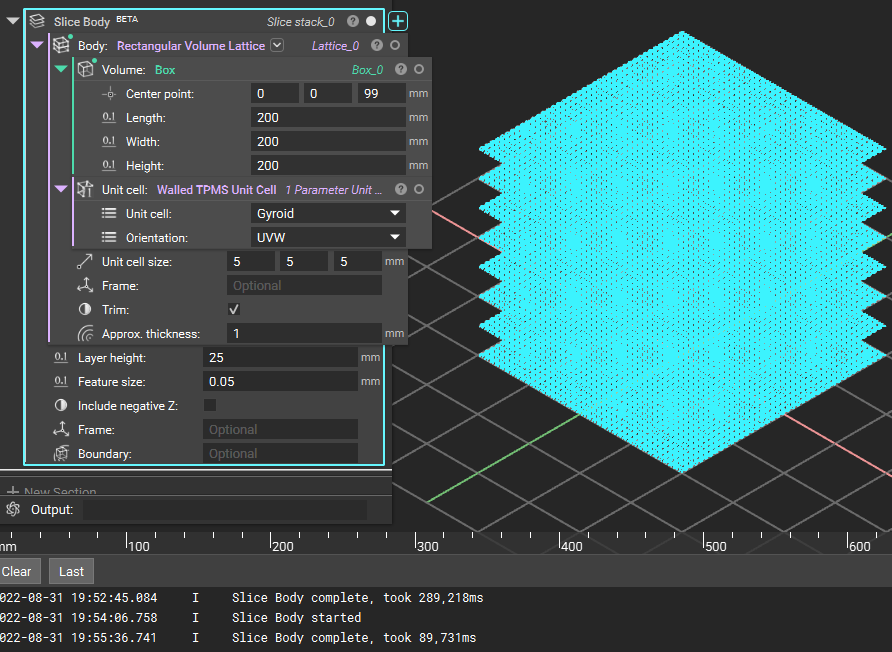
- We significantly improved the Slice Body block performance by streamlining the polygon repair code.
- The overall performance improvement delivers a 3-5x shorter slicing time, although we have seen as high as > 50x improvement in some test cases comparing Slice Body 3.1 (Beta) to Slice Body 3.0.
- Our test cases showed no difference in the results between Slice Body 3.0 and Slice Body 3.1 (Beta).
- We will be collecting the user feedback and promoting this block version as the production version soon.

- We also improved the progress bar to reflect the number of slices completed while slicing. You will be able to find more detailed messages in the debug panel and nTopCL logs.
Simulation Glyph Size Control
Wondering what glyphs are? These are the markers that indicate boundary conditions in your simulation model. Whether designing a part that is a few millimeters or meters, you can now adjust the glyph size to fit your model.
|
Fixed simulation glyphs size in previous releases. |
New adjustable simulation glyphs size. |
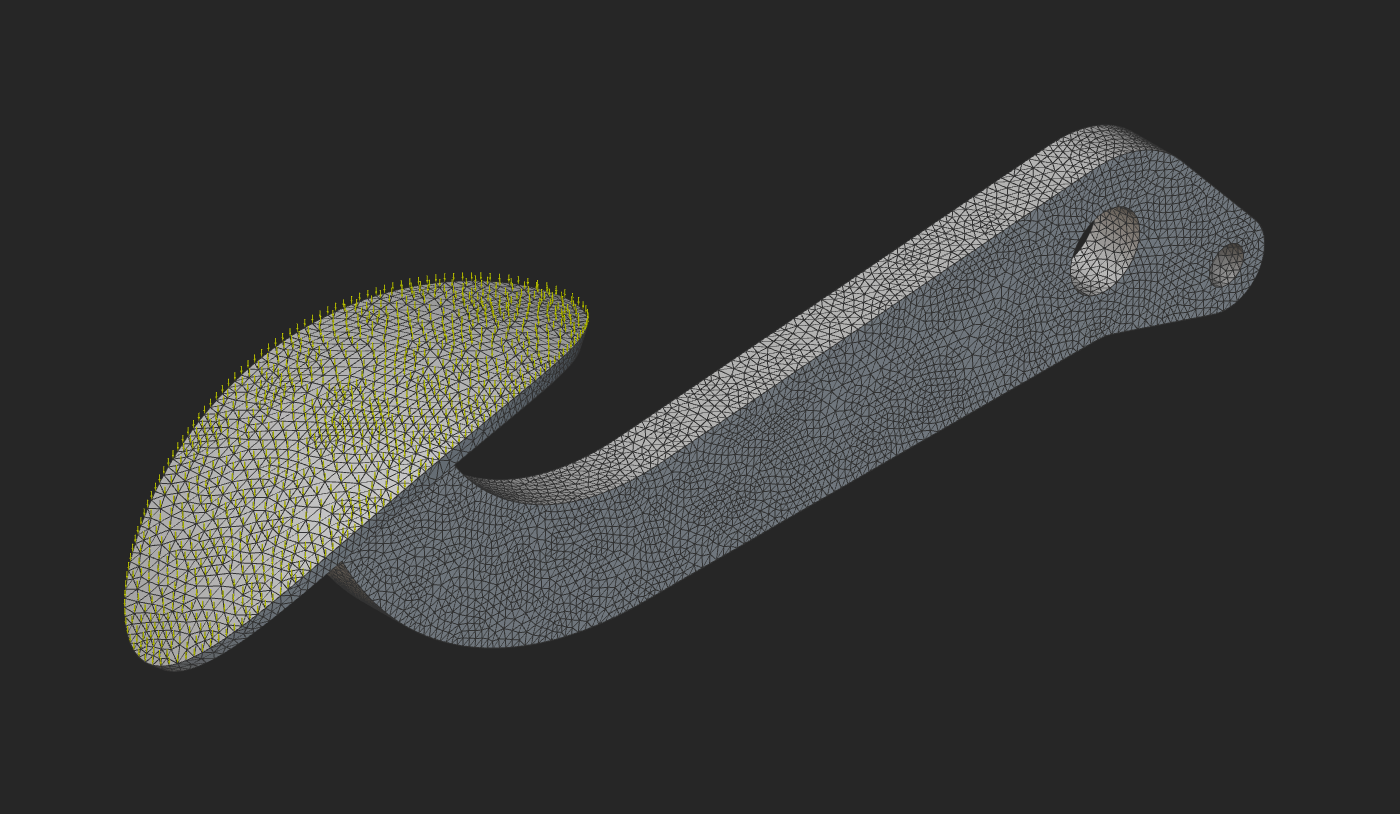
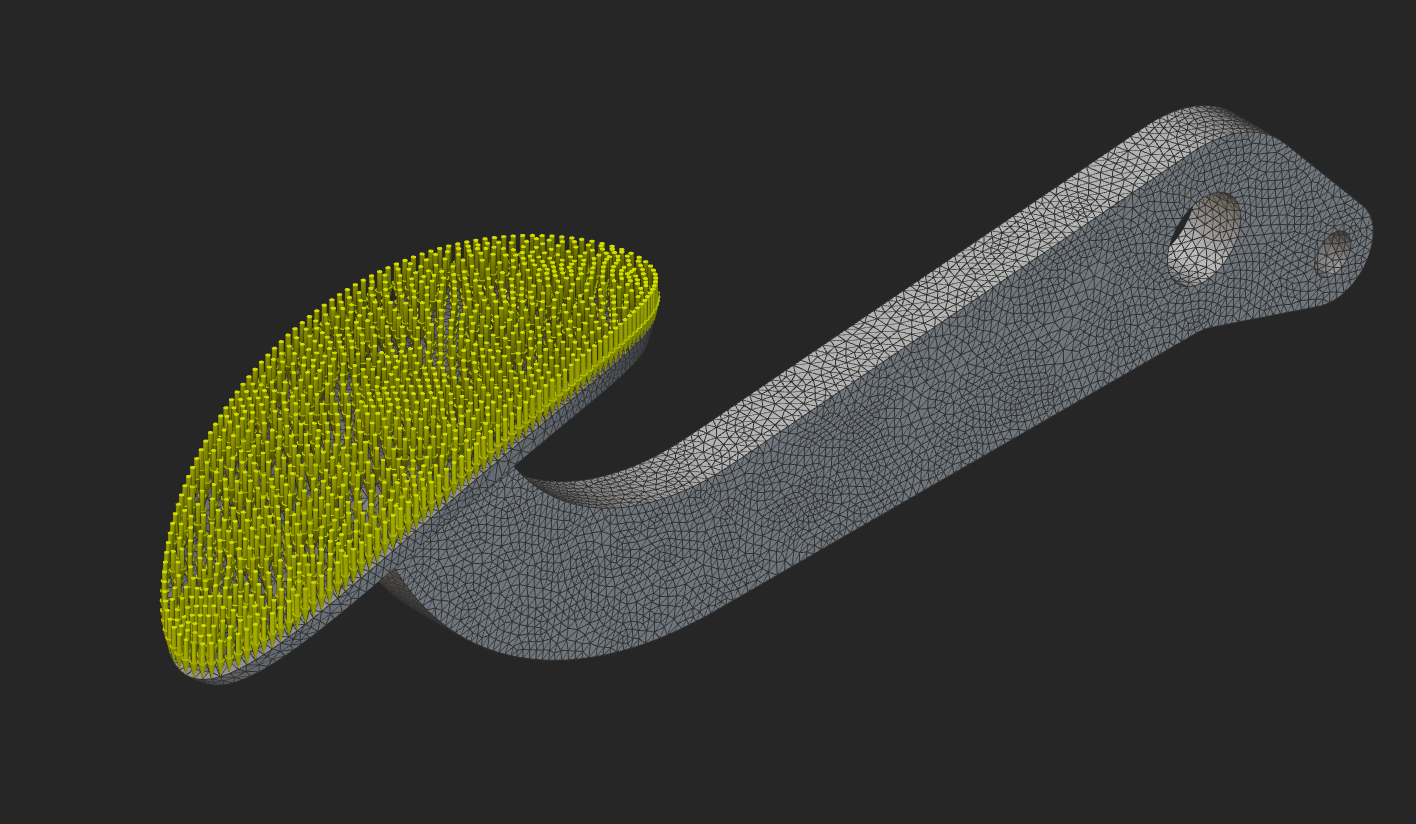
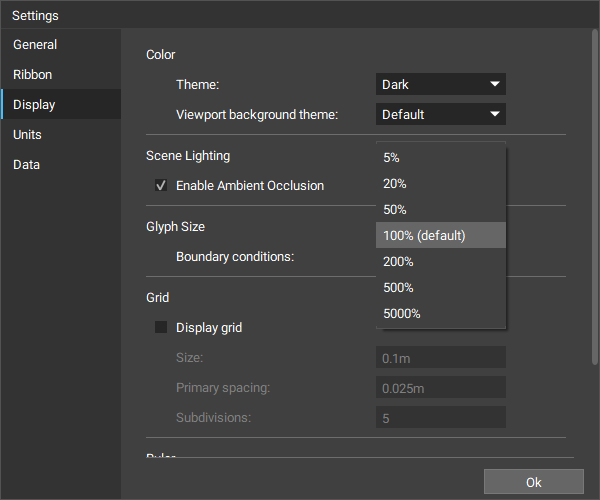
- Set simulation glyphs size in Display settings.
Usage Improvements
- We improved the “Bone Plate Generator” example file to have more standardized inputs for a nested Custom Block.
- We improved the load times of files with FE Meshes by multiple optimizations of the serializing and deserializing models resulting in 30% faster load times.
Bug Fixes
- We fixed an issue where Context Search wasn’t working correctly when Boolean Union and Boolean Subtract were selected.
- We fixed an issue in the Smoothen Body block that mistakenly cut off a section of the output Body when a Bounding Box was provided in the optional Domain input.
- We fixed an issue causing nTop to unexpectedly exit when using the Field Viewer to view Vector Point Maps when the viewer was set to a size of 2 or more meters.
- We fixed a bug in the vertices property of the Polygon data type that resulted in a non-deterministic vertex order.