
nTop 6.3 is here! This release introduces new mesh blocks for shell modeling, including Intersect Meshes and Split Welded Mesh, along with Convergent Body from Named Body and Set Body Name. As with every release, nTop's dedicated support team is ready to answer your questions. Please visit support.ntop.com to gain access to helpful tutorials and support articles.
Intersect Meshes
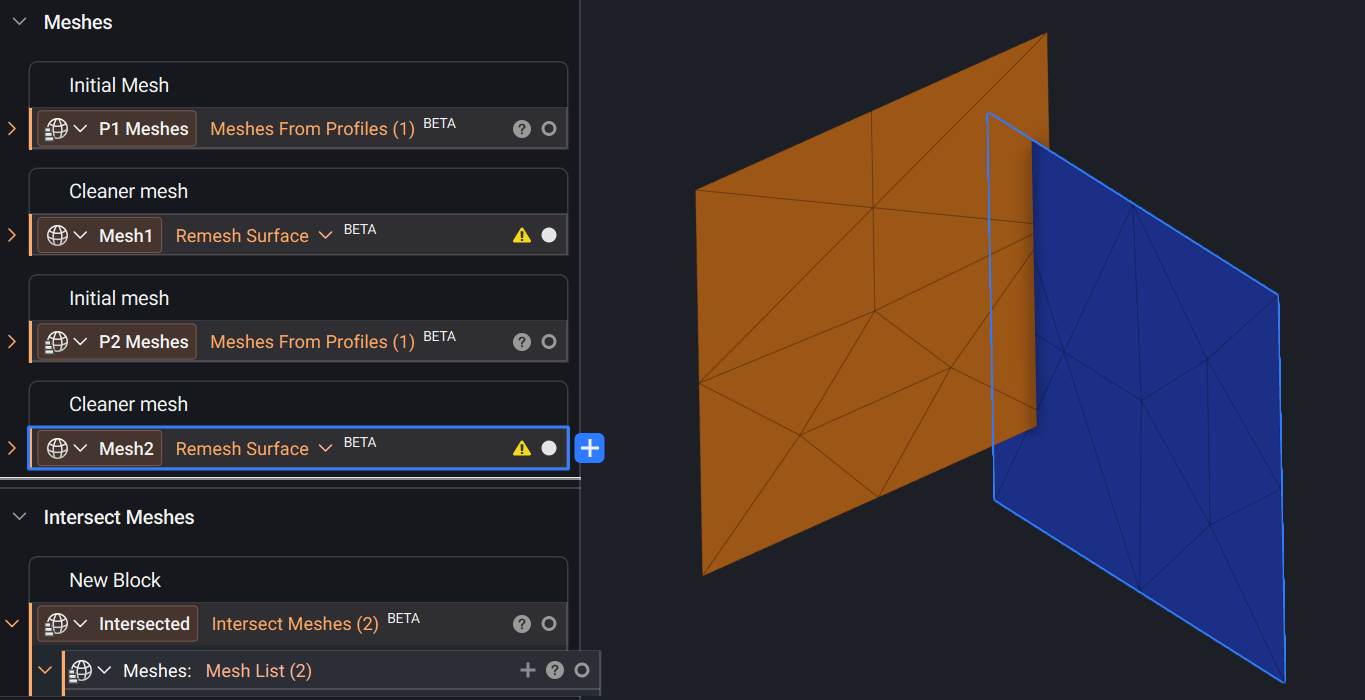
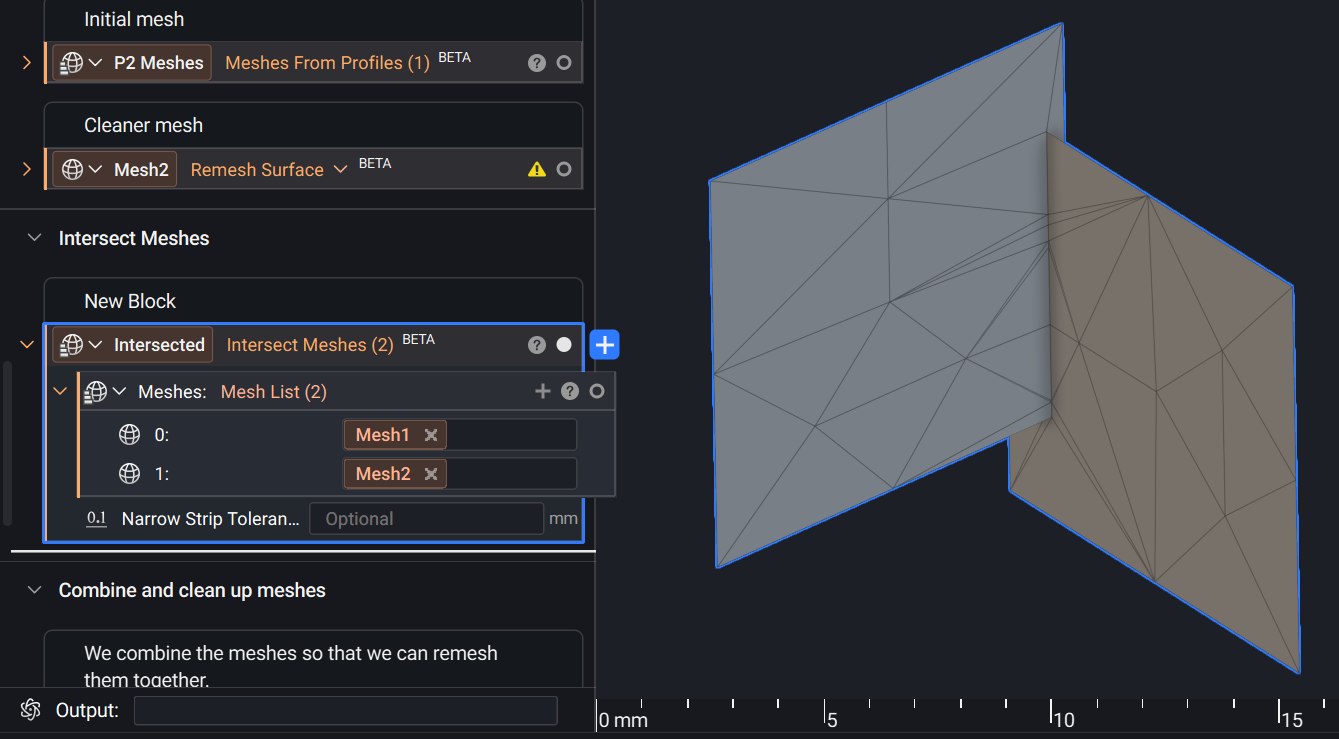
- The new Intersect Meshes block intersects a list of surface meshes and embeds the intersection seam into each one. The output is a list of conformal meshes in the same order as the input, which makes it useful for building shell meshes for structural analysis and shared mesh interfaces.
- Each pair of meshes is corefined independently, so a mesh that intersects several others picks up a seam from each of them.
- Inputs:
- Meshes: Surface meshes to intersect. All meshes must be triangulated.
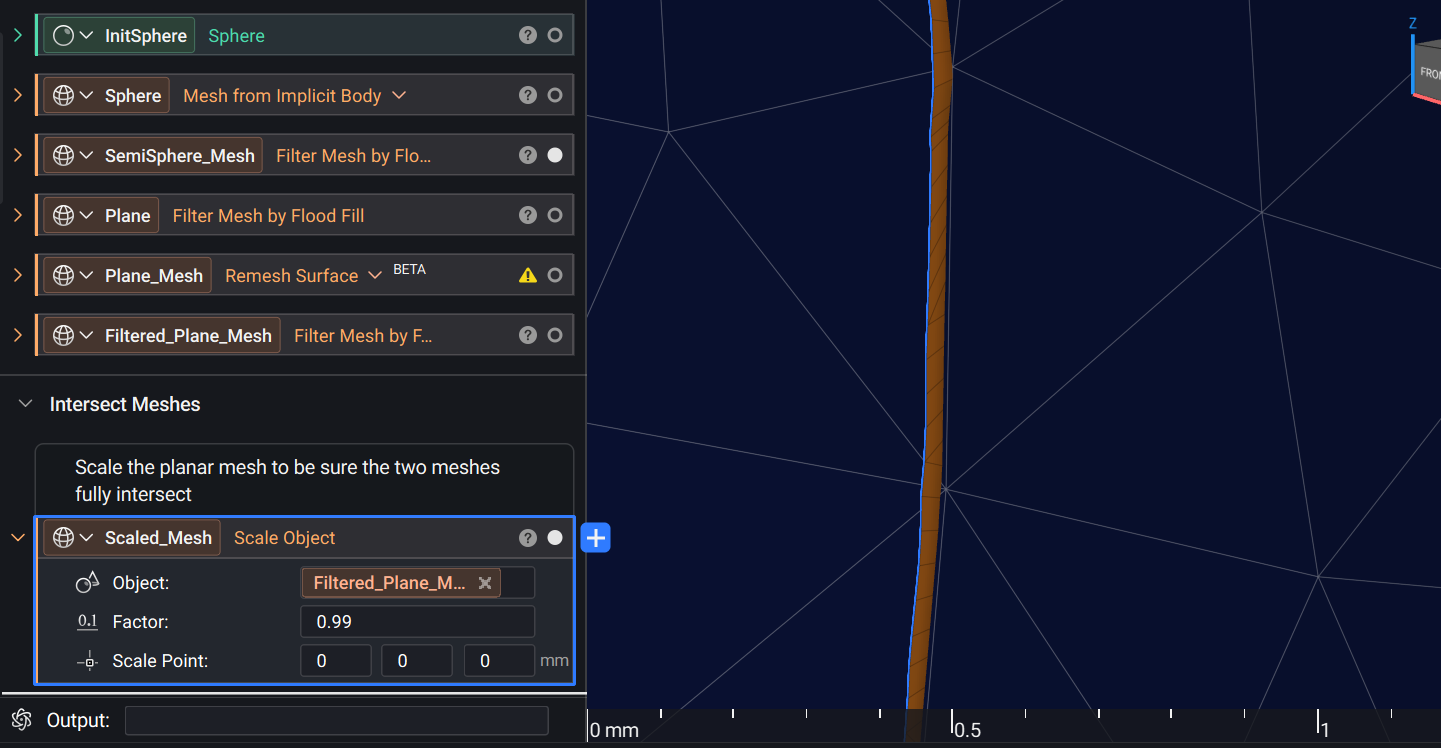
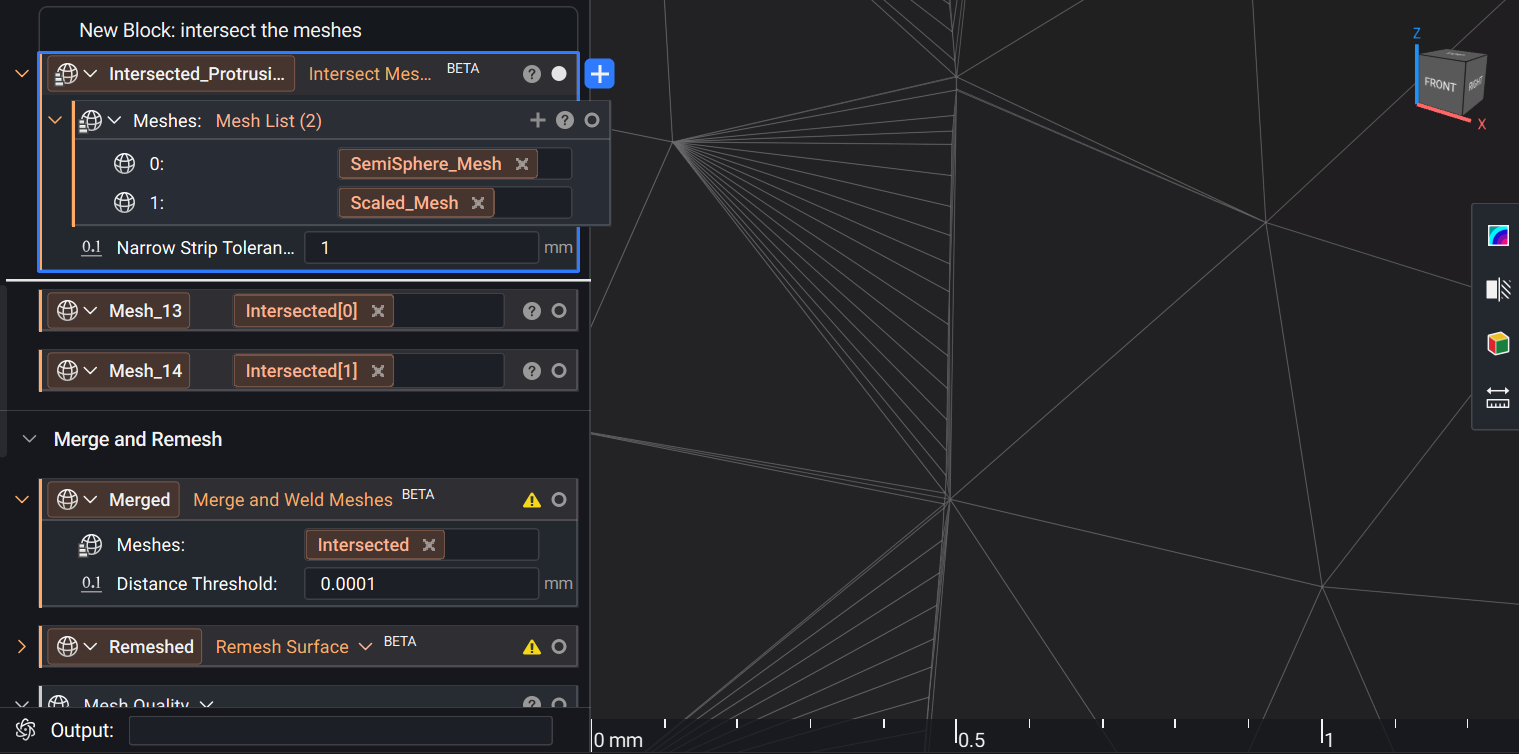
- Protrusion Tolerance: Removes narrow protrusions created when a mesh boundary lies very close to an intersection between two meshes. A refined face is deleted when its centroid sits within this distance of the seam and its signed-distance sign matches the majority of the protrusion. Set to 0 or leave unconnected to disable.
- Output: List of Meshes
Split Welded Mesh
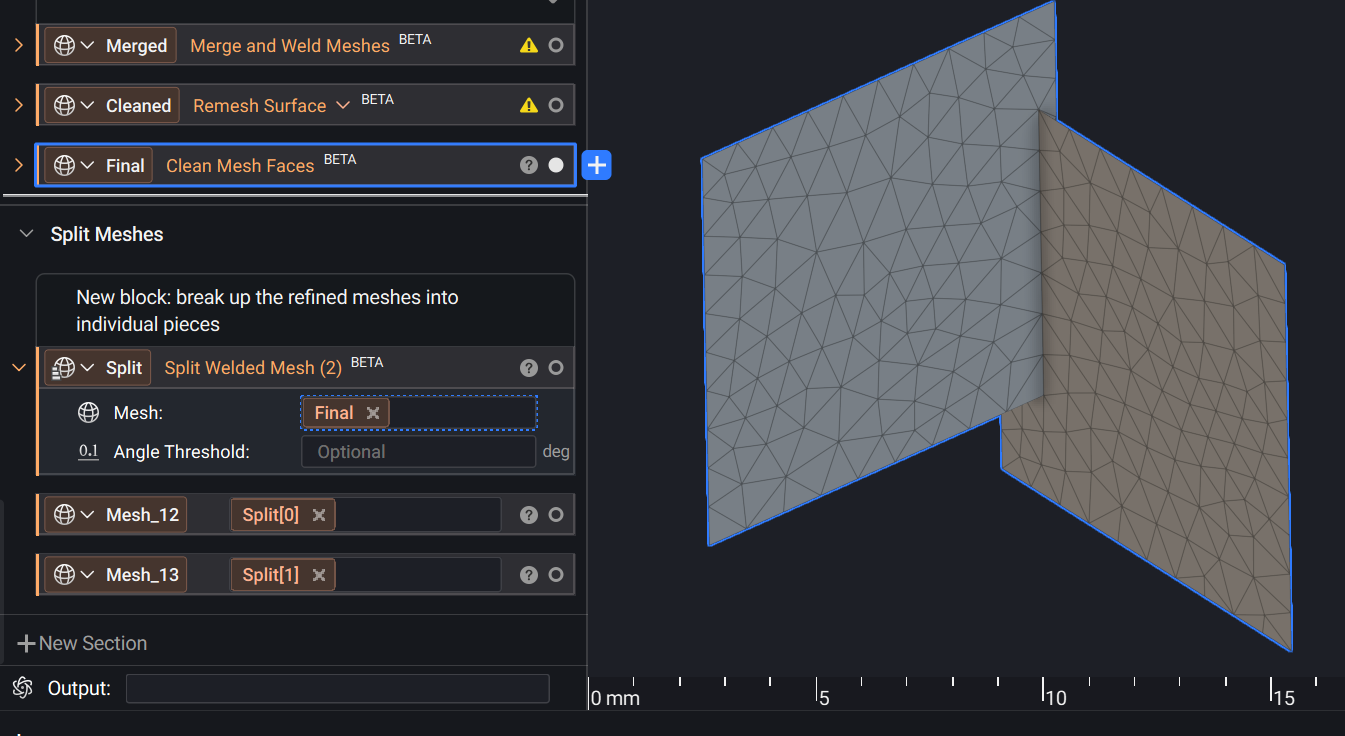
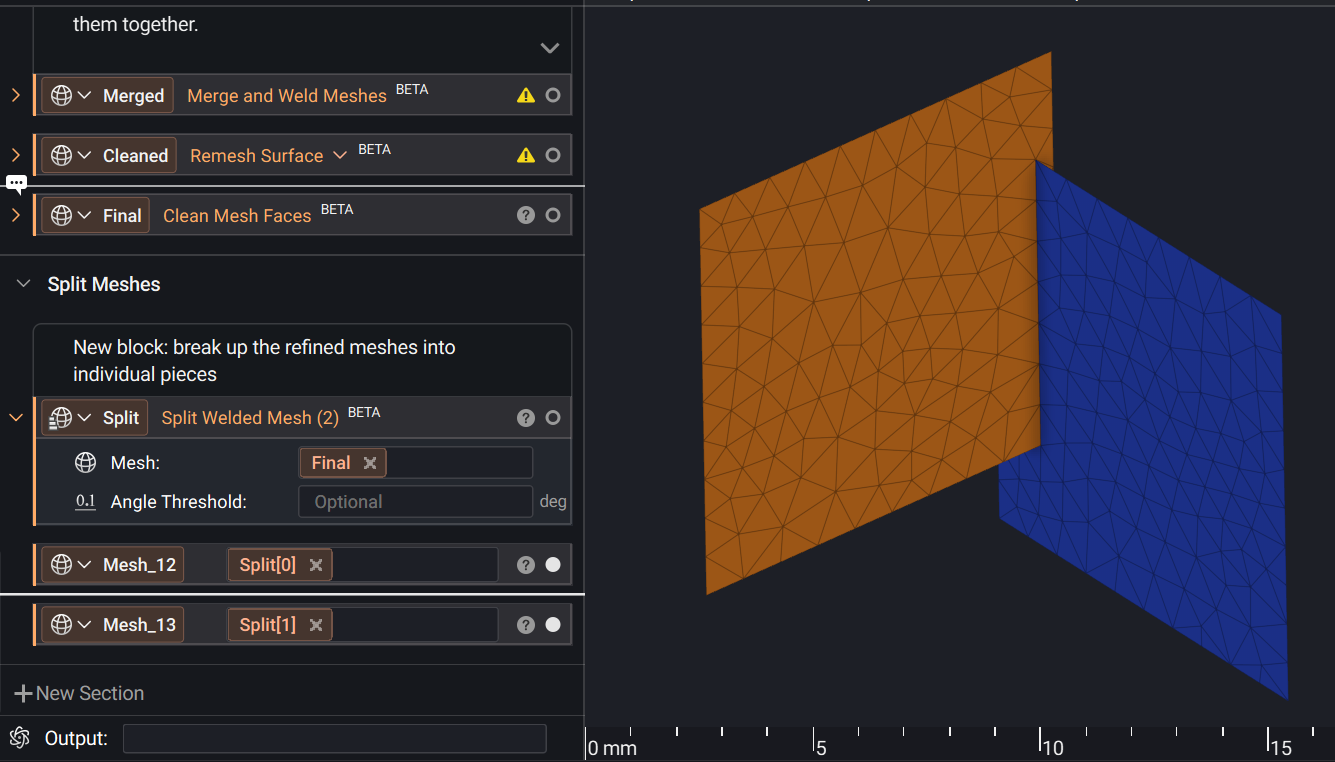
- The new Split Welded Mesh block splits a mesh into a list of separate patches, using non-manifold and boundary edges as barriers. Use it to separate intersecting meshes that have been merged and remeshed.
- Adjacent patches keep their own copy of any boundary vertex they share.
- Inputs:
- Mesh: Mesh to split. Must contain at least one face.
- Angle Threshold: Patches on either side of a non-manifold edge merge if the angle between their face normals is within this threshold. Each face is matched to its closest-angle neighbor across the edge, not every qualifying pair. Leave unconnected to always split at every non-manifold or boundary edge.
- Output: List of Meshes
Convergent Body from Named Body
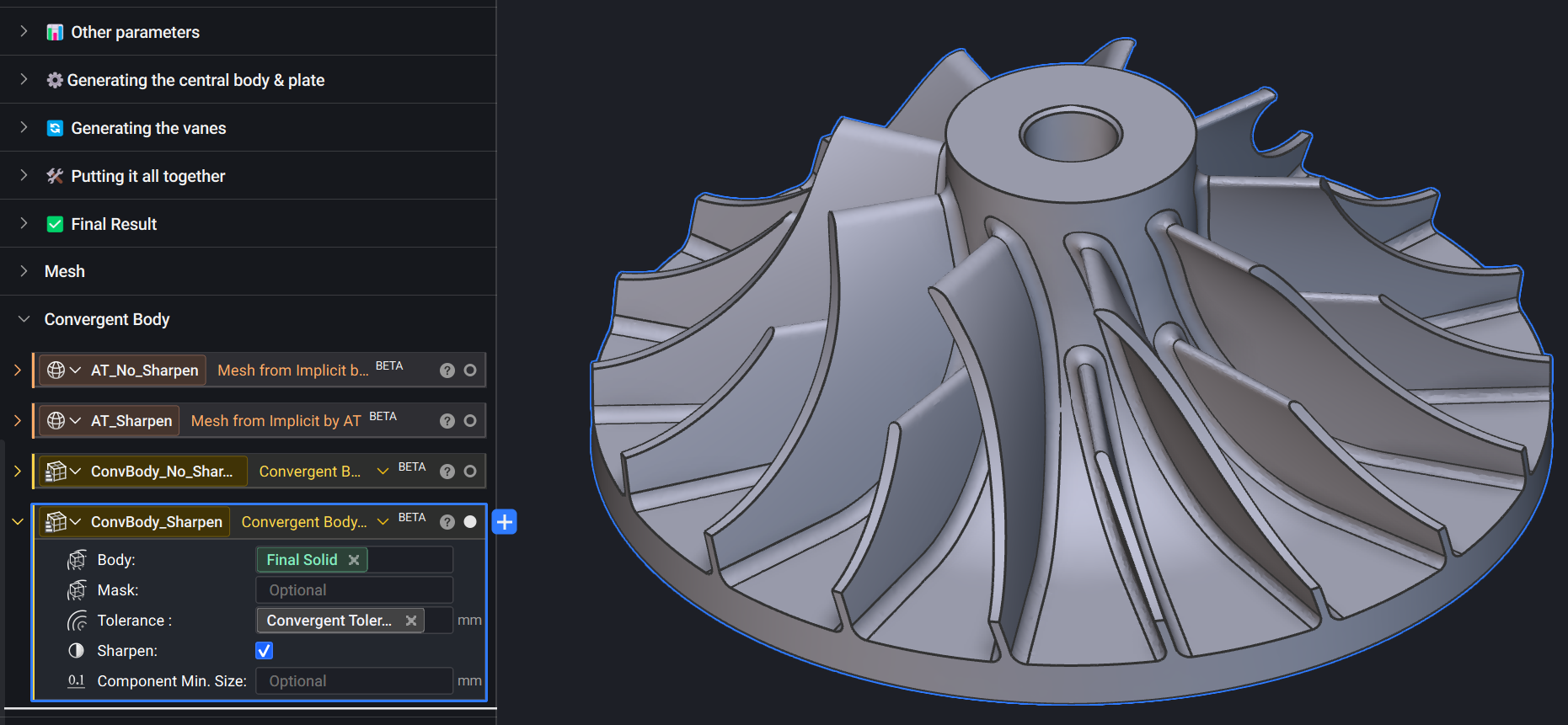
- The new Convergent Body from Named Body block creates a convergent CAD body from a named implicit body using adaptive tessellation. A convergent body stitches together triangulated surface meshes, and can be exported to CAD and CAE software that supports convergent body representations.
- Inputs:
- Body: Implicit Body to be meshed.
- Mask: Mask used to further divide the output into faces.
- Tolerance: The maximum allowable deviation of the mesh from the implicit geometry. As this value gets smaller, the resulting mesh will be more precise, but the block will take longer to compute.
- Sharpen: Option to preserve sharp edges, corners, as well as walls thinner than meshing tolerance. If you check this option, the block will take longer to compute. Note: only geometric surface features corresponding to named face boundaries will be preserved.
- Component Min Size: If the output contains more than one disconnected component, setting this input will delete any disconnected component whose bounding box diagonal is smaller than the provided value.
- Output: List of CAD Bodies
Set Body Name
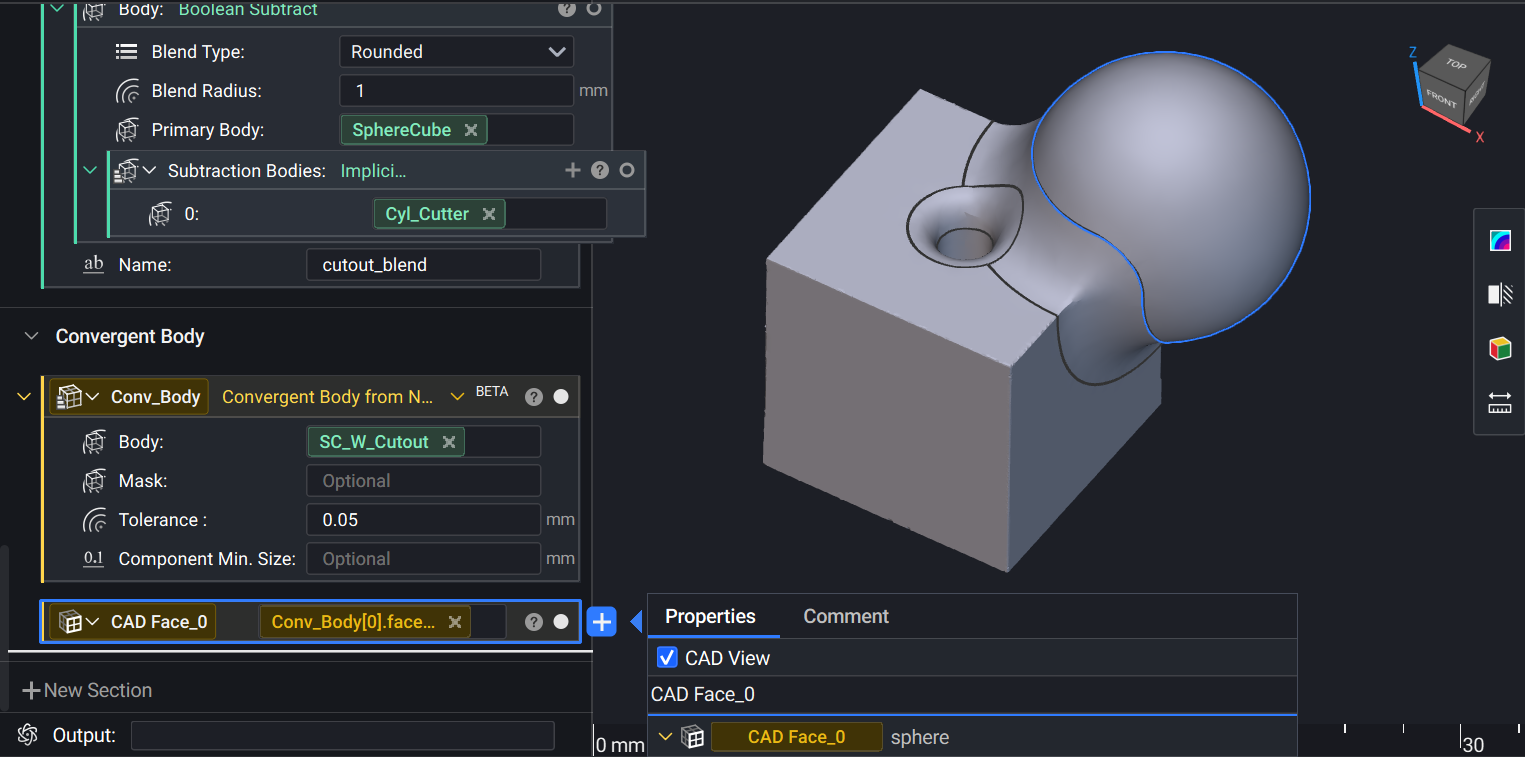
- The new Set Body Name block tags an implicit body with a name. The name is carried onto the surfaces of meshes and convergent bodies, so you can identify features such as a cutout in downstream CAD and CAE tools.
- Names are currently used only for exported data and are not shown elsewhere in nTop.
- Inputs:
- Body: Implicit Body to apply name to.
- Name: Name to apply.
- Output: Implicit Body
Usage Improvements
- Block names in a notebook must now be unique, so duplicate names are no longer allowed.
- External blocks whose input names would change are rejected on import.
- nTop Automate (ntopcl) now returns an error when a JSON input script contains duplicate input names.
- You can now select multiple blocks and drop them onto a list input in a single step.
- Floating comments now stay collapsed once you collapse them.